
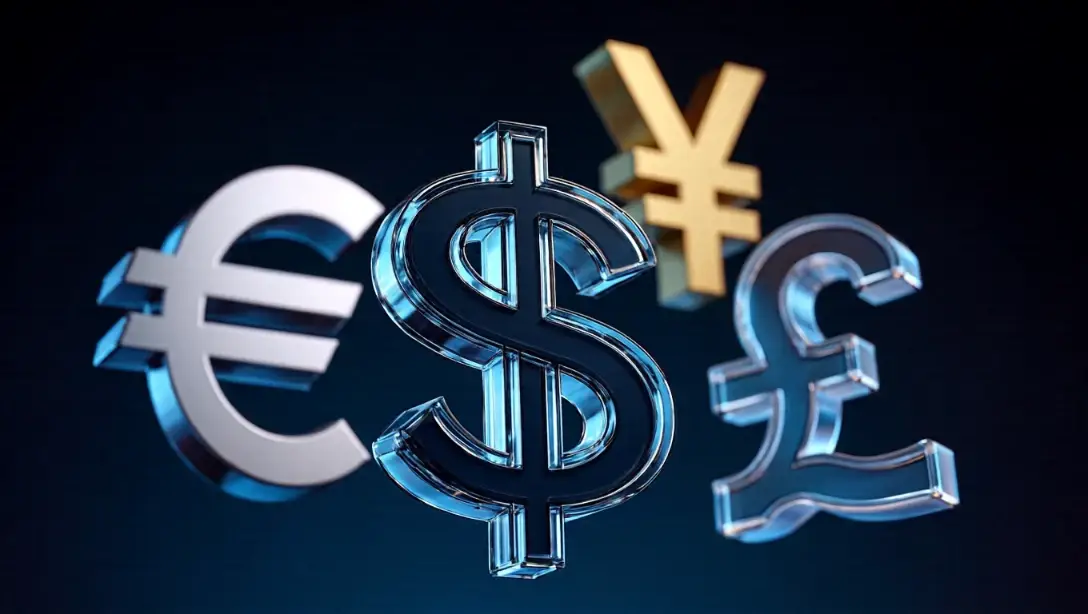
The Simple Truth Behind the Charts
You’ve probably seen the screenshots: glowing green numbers, complicated charts with sharp zig-zags, and the whole “make money from a laptop in Bali” fantasy. But the moment you open a trading platform for the first time, reality hits. It doesn’t feel like a dream lifestyle — it feels like sitting in the cockpit of a jet you have absolutely no idea how to fly.
Most beginners get overwhelmed right here. They assume Forex is some elite financial science meant only for Wall Street types. The jargon doesn’t help either — pips, spreads, leverage, margins… it sounds like you accidentally walked into a math lecture you didn’t sign up for.
Here’s the part that surprises people: the core logic of Forex is something you’ve probably already done in real life. Strip away the “finance-bro” noise, and it’s actually pretty straightforward. Almost boringly simple, honestly.
The Simple Definition
At its core, Forex (Foreign Exchange) is just exchanging one currency for another. That’s it.
If you’ve ever traveled abroad and swapped Dollars for Euros at the airport, congrats — you’ve already taken part in the Forex market. The only difference in trading is why you exchange. You’re not buying Euros for coffee; you’re buying them because you believe their value will rise so you can sell them back later at a higher price.
Same action. Different intention.
Currencies Are Traded in Pairs
In the stock market, you buy shares of a single company like Apple. Forex doesn’t work like that. Everything moves in pairs. You can’t just “buy the Euro.” You have to buy it against another currency.
Take the most well-known pair: EUR/USD.
- Base currency (EUR): The first one listed
- Quote currency (USD): The second one
When you hit Buy on EUR/USD, you’re betting the Euro will strengthen compared to the US Dollar. In practical terms, you’re buying Euros and selling Dollars at the same time — whether you realize it or not.
How Traders Actually Make Money
It all comes down to price movement. You make money from the difference between where you enter and where you exit. Simple in theory. Harder in practice (mostly because of emotions, but we’ll get there).
- Going Long (Buy): You buy at 1.0800. Price rises to 1.0900. You sell and keep the difference.
- Going Short (Sell): You “sell” at 1.0800, expecting a drop. Price falls to 1.0700. You close the trade and keep the profit.
One of the wild parts about Forex? You can make money in good economies and bad ones — as long as you’re on the right side of the move. The market doesn’t care about your opinion, only direction.
Why Currency Prices Move
Prices aren’t random, even if they sometimes feel that way at 2 a.m. when a trade goes against you. They usually react to the overall health and outlook of a country’s economy. The big drivers are:
- Interest Rates: Higher rates often attract investors to that currency.
- Economic Events: Jobs data, GDP reports, etc.
- Inflation: How quickly a currency is losing purchasing power.
- Politics: Elections, conflicts, trade agreements.
- Market Sentiment: Sometimes prices move simply because traders collectively feel optimistic or scared. Markets are human, after all.
Forex vs. Stocks: What’s the Difference?
| Feature | Forex | Stocks |
| Market Hours | 24 hours / 5 days a week | Fixed exchange hours |
| Liquidity | Extremely high (easy to enter/exit) | Varies by company |
| Leverage | High (control more with less money) | Usually lower |
| Complexity | Thousands of currency pairs | Thousands of companies |
Neither is “better.” They’re just different games with different rules.
The Truth Most Beginners Don’t Hear
Here’s the part the online “gurus” conveniently skip: success in Forex is about 20% strategy and 80% psychology and risk management.
Most people don’t blow their accounts because they guessed the wrong direction. They blow up because they used a position size that was way too big, panicked when price moved slightly against them, and closed early — or did the opposite and refused to accept a small loss until it became a disaster.
Forex doesn’t just test your analysis. It tests your patience, ego, and self-control. And it’s brutally honest about it.
Can You Start with a Small Account?
Yes. You don’t need $10,000 to begin. You can technically start with $100–$500.
But here’s the catch: the “Small Account Trap” is very real. When your balance is small, the temptation to take huge risks to flip $100 into $1,000 quickly is strong. That’s gambling, not trading — even if it happens on a trading platform.
If you start small, you have to use micro lots (the smallest trade size). It may feel slow, even boring, but that’s exactly what keeps you alive long enough to learn.
The Missing Piece: Your Broker
You can have great knowledge and still struggle if your broker works against you.
Some brokers hide costs in high spreads (the fee you pay when entering a trade). Others have platforms that conveniently freeze during major news events — which is exactly when volatility (and opportunity) is highest. Also, not every broker allows micro-lot trading, which small accounts desperately need.
This part isn’t exciting, but it matters more than people think.
Forex, to me, has always felt less like trying to beat the market and more like learning to manage yourself. When you’re staring at the screen, your patience, fear, and greed all show up one by one. No one really advertises that part, but the real battle isn’t with the chart — it’s in your own head. Once you accept that, you stop chasing fast money and start approaching trading with a calmer mindset. That’s usually the point where things begin to change.
Ready to Step into the Market?
If you’re moving from theory to practice, you need a broker that doesn’t quietly drain your account through fees. We’ve reviewed platforms based on beginner-friendliness, regulation, and low-cost access.
👉 [Check out the Best Forex Brokers for Beginners here]
Quick Summary
- What is Forex? Exchanging one currency for another to profit from price changes.
- How it works: You trade pairs (like EUR/USD). You profit if the base currency strengthens or weakens as you expected.
- Why prices move: Interest rates, inflation, economic data, and global stability drive the market.